Source Express Transportation Side Wall Fence for Residential, Factories, Parks
Find 30 verified listings for Express Transportation Side Wall Fence suitable for residential, factory, and park applications. Compare specifications including dimensions, materials, and customization options to identify the best supplier for your project needs.
Key considerations
Products List


Export-Grade Double Wire Fence -- 50X200mm Mesh -- High Security
$9.25 - $11.00
MOQ: 500 Square Meters


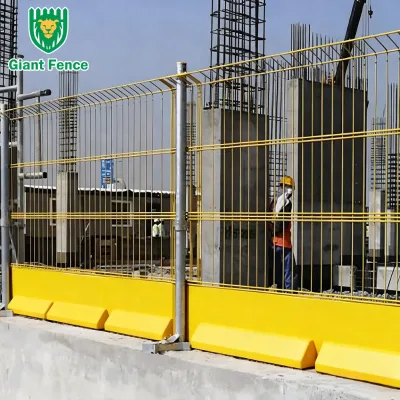


High Quality Supports Customized Protection Multifunctional Chain Link Fence
$7.60 - $8.00
MOQ: 10 Square Meters


ISO9001 High Quality Protection Long Service Life Chain Link Fence
$7.60 - $8.00
MOQ: 10 Square Meters

ISO9001 Long Service Life Multifunctional Supports Customized Chain Link Fence
$7.60 - $8.00
MOQ: 10 Square Meters
Comprehensive Sourcing Guide
Strategic Sourcing Guide for Express Transportation Side Wall Fences
Navigating the global market for specialized transport infrastructure requires a disciplined approach to verifying technical specifications, compliance standards, and supplier capabilities. When sourcing components such as side wall fences for express transportation, buyers must distinguish between general fencing products and those engineered specifically for heavy-duty logistics. The following guide outlines the critical factors for evaluating these assets, ensuring that procurement decisions are grounded in verified data rather than marketing assertions.
Technical Specifications and Structural Integrity
The primary function of a side wall fence in an express transportation context is to provide secure containment while maintaining structural rigidity under dynamic loads. Buyers must scrutinize the material composition and manufacturing techniques to ensure the product meets the demands of long-haul logistics. In the current market, aluminum and steel remain the dominant materials for these applications, each offering distinct advantages regarding weight and durability.
For aluminum-based solutions, the product attributes often highlight a "Welded" technique combined with a "Powder Coated" finishing process. This combination is critical for resisting corrosion and maintaining a smooth surface that is easy to clean, even after exposure to rain or road debris. The structural integrity of these units is frequently described as a "Welding+Screw" configuration, which allows for modular assembly and potential repairability. Dimensions are a key variable; standard widths may range from 1200mm to 6000mm, with heights typically spanning 400mm to 2400mm, though customization is widely available to fit specific trailer profiles.
Conversely, steel-based side wall fences are often categorized under "Heavy Duty" grades. These units are designed for maximum load-bearing capacity and are frequently associated with flatbed configurations. Key specifications for steel variants include a tread width of approximately 1820mm and a platform thickness of 3mm diamond plate, which provides essential slip resistance. The structural design often incorporates a wheel base ranging from 7000mm to 8000mm, ensuring stability during transit. When evaluating these units, buyers should verify the axle brand, such as Fuwa or optional alternatives, and confirm the suspension type, which is typically mechanical in heavy-duty applications. The presence of an ABS Anti-lock Braking System is a significant safety feature that should be confirmed for any integrated trailer systems.
Compliance and Certification Verification
In the international logistics sector, compliance with international standards is non-negotiable. Buyers must rigorously verify that suppliers possess valid certifications that align with the destination market's regulatory requirements. The observed market data indicates a prevalence of ISO, CE, CCC, RoHS, and ASTM certifications. However, the presence of a certification label does not automatically guarantee compliance for a specific batch; it must be cross-referenced with the specific product model.
For aluminum fence products, certifications such as ISO, CCC, and ISO/TS are commonly cited. These standards often relate to quality management systems and material safety. For steel-based heavy-duty units, the certification landscape includes CE, RoHS, and ISOASTM, which are critical for ensuring the product meets European and American safety and environmental standards. The "OEM" standard is frequently mentioned, indicating that the product is manufactured to original equipment manufacturer specifications, which is essential for maintaining warranty coverage and compatibility with existing fleet assets.
Buyers should be cautious of generic certification claims. It is imperative to request specific documentation for the exact model number being purchased, such as the HLT-5ES7 or PX models. The origin of the product, often listed as China or specifically Shandong, China, does not negate the validity of certifications, but it does necessitate a deeper review of the testing laboratory that issued the certificate. Verification should extend to the "Condition" of the product, ensuring that "New" units are delivered with current, unexpired certification documents.
Cost Drivers and Pricing Dynamics
The pricing of express transportation side wall fences is influenced by a complex interplay of material costs, customization levels, and order volume. The observed price range in the market is exceptionally broad, spanning from $0.20 to $13,000 USD. This variance reflects the difference between individual components, such as slats or panels, and complete, heavy-duty trailer assemblies.
Material selection is the primary cost driver. Aluminum units, while offering excellent weather resistance and a maintenance-free lifespan of up to 10 years, often command a higher initial price due to the cost of raw materials and the powder-coating process. Steel units, particularly those with heavy-duty grades and diamond plate platforms, involve significant material weight and manufacturing complexity, which also drives up costs. Customization is another significant factor; while the "Minimal Qty" for some items is as low as 1, larger orders often benefit from economies of scale. However, custom dimensions, such as specific widths or heights, can introduce additional tooling and setup costs.
Buyers must also consider the "Sample" policy. Many suppliers require direct contact to arrange samples, which can impact the initial procurement timeline and cost. The "Business Type" of the supplier, typically listed as "Manufacture," suggests that buying directly from the factory may reduce costs compared to trading companies, but it also requires a more robust quality assurance process on the buyer's part.
Typical Applications and Usage Scenarios
Understanding the intended application is vital for selecting the correct side wall fence. The market data indicates that these products are utilized in a variety of settings, including residential areas, factories, parks, and green grounds. However, for express transportation, the focus shifts to industrial and logistics applications.
Aluminum slat fences are particularly suited for environments where aesthetics and low maintenance are priorities, such as park boundaries or factory perimeters. Their "Smooth and Clean" surface, which can be cleaned by rain, makes them ideal for locations where frequent washing is impractical. In contrast, steel flatbed fences with heavy-duty specifications are designed for the rigors of freight transport. The "Self-dumping" attribute is a key differentiator; units that are "Not Self-dumping" are typically used in fixed configurations where the cargo is manually unloaded, whereas self-dumping variants offer mechanized efficiency for bulk materials.
The "Usage" category also extends to the specific geometry of the transport vehicle. For instance, a 1200mm fence height is standard for many trailer applications, but the "Distance Between Picket" of 80mm or 95mm must be chosen based on the type of cargo being transported to prevent spillage. The "Shape" of the unit, whether flatbed or otherwise, dictates the loading method and the type of securing mechanisms required.
Supplier Evaluation and Business Model Assessment
Selecting the right supplier is as critical as selecting the right product. The data suggests that most suppliers in this sector operate as "Manufacture" entities, offering direct production capabilities. This model often allows for greater flexibility in customization, as indicated by the "Customization: Available" attribute. Buyers should prioritize suppliers who explicitly state their ability to handle OEM orders, as this ensures they can tailor the product to specific fleet requirements.
When evaluating suppliers, the "Location" is a factor to consider for logistics and lead times. Many manufacturers are based in China, with specific hubs in Shandong. While this location offers competitive pricing, buyers must verify the supplier's capacity to handle international shipping and export compliance. The "Product Packing" method, whether "by Container" or on a "Steel Pallet," is also a crucial detail for freight planning.
Buyers should avoid suppliers who cannot provide clear evidence of their manufacturing process. The "Technique" used, such as welding, should be consistent with the product's intended load-bearing requirements. Furthermore, the "Sample" policy is a strong indicator of supplier confidence; those willing to provide samples upon contact are generally more reliable than those who refuse.
Quality Control and Long-Term Procurement Considerations
Ensuring long-term value requires a focus on quality control and maintenance. The "Maintenance Cost" is a significant consideration, with some products claiming "10-Year Maintenance Free" status. This claim is typically associated with aluminum products that feature "Powder Coated" finishes and "Weather Resistance" rated as "Excellent." Buyers should verify the specific coating standards to ensure the product will withstand the harsh conditions of road transport, including exposure to salt, UV radiation, and impact.
The "Surface Treatment" and "Frame Finishing" processes are critical for longevity. A "Coated" surface that is "Smooth and Clean" reduces the risk of corrosion and simplifies cleaning. For steel units, the "Grade" and "Tread" specifications must be verified to ensure they meet the heavy-duty requirements of the intended application. The "Landing Gear" capacity, such as a 28-ton rating, is another critical quality metric for trailer-mounted fences.
Long-term procurement strategies should include a review of the "Standard" compliance. Products adhering to OEM standards are more likely to be compatible with existing systems and easier to replace in the future. Buyers should also consider the "Traction Pin" size, which can range from 50mm to 90mm, and ensure it matches the towing vehicle's specifications to prevent mechanical failure. Finally, the "Tyre" specification, such as 1200r20, must be compatible with the vehicle's load capacity to ensure safe operation over the product's lifespan.
Comparison of Key Product Attributes
To facilitate a clearer understanding of the differences between available options, the following table summarizes the key attributes observed in the market data. This comparison highlights the distinctions between aluminum and steel solutions, helping buyers align their procurement with specific operational needs.
| Attribute | Aluminum Slat Fence | Steel Heavy Duty Fence |
|---|---|---|
| Primary Material | Aluminum | Steel |
| Technique | Welded | Welded |
| Surface Treatment | Powder Coated | Coated |
| Maintenance Claim | 10-Year Maintenance Free | Variable (Depends on Grade) |
| Typical Usage | Residential, Factories, Parks | Express Transportation, Flatbed |
| Structure | Welding + Screw | Mechanical Suspension |
| Customization | Available (Width/Height) | Available (Dimensions/Specs) |
| Certification | ISO, CCC, CE, ASTM | CE, RoHS, ISOASTM |
| Origin | China | Shandong, China |
| Packing | By Container | Steel Pallet or Customized |
This structured approach to sourcing ensures that buyers can make informed decisions based on verified data, minimizing the risk of procurement errors and maximizing the operational efficiency of their transportation assets. By focusing on technical specifications, compliance, and supplier reliability, organizations can secure high-quality side wall fences that meet the rigorous demands of modern logistics.
FAQs
What certifications do express transportation side wall fences typically have?
These fences typically hold ISO, CE, CCC, RoHS, and ASTM certifications. Buyers must verify that specific documents match the exact model number, such as HLT-5ES7 or PX, rather than relying on generic labels found on the product page.
Which materials are used for aluminum and steel side wall fences?
Aluminum units are used for lightweight applications with excellent weather resistance, while steel variants are categorized as heavy duty for maximum load capacity. Aluminum features powder coating, whereas steel often includes diamond plate platforms for slip resistance.
Can I customize the dimensions of the side wall fence?
Yes, customization is available for width, height, and picket distance. Standard widths range from 1200mm to 6000mm, and heights span 400mm to 2400mm, allowing buyers to tailor the product to specific trailer profiles or facility requirements.
How is the structural integrity ensured for heavy duty applications?
Structural integrity is achieved through a welding and screw configuration combined with heavy duty steel grades. For steel units, specifications include a 1820mm tread width and a 3mm diamond plate platform to ensure stability during long-haul logistics transport.
What is the maintenance requirement for these fence products?
Aluminum fences claim a ten-year maintenance-free lifespan due to excellent weather resistance and powder-coated finishes. Their smooth surfaces can be cleaned by rain, reducing the need for frequent manual washing or repainting in industrial environments.
Where are these products manufactured and what is the origin?
Products originate from China, with specific manufacturing hubs located in Shandong. Buyers should verify the supplier's location and capacity for international shipping, as most manufacturers operate directly as factories to offer competitive pricing and customization.